The Man Who Measured God: Piazzi Smyth and the Pyramid Inch
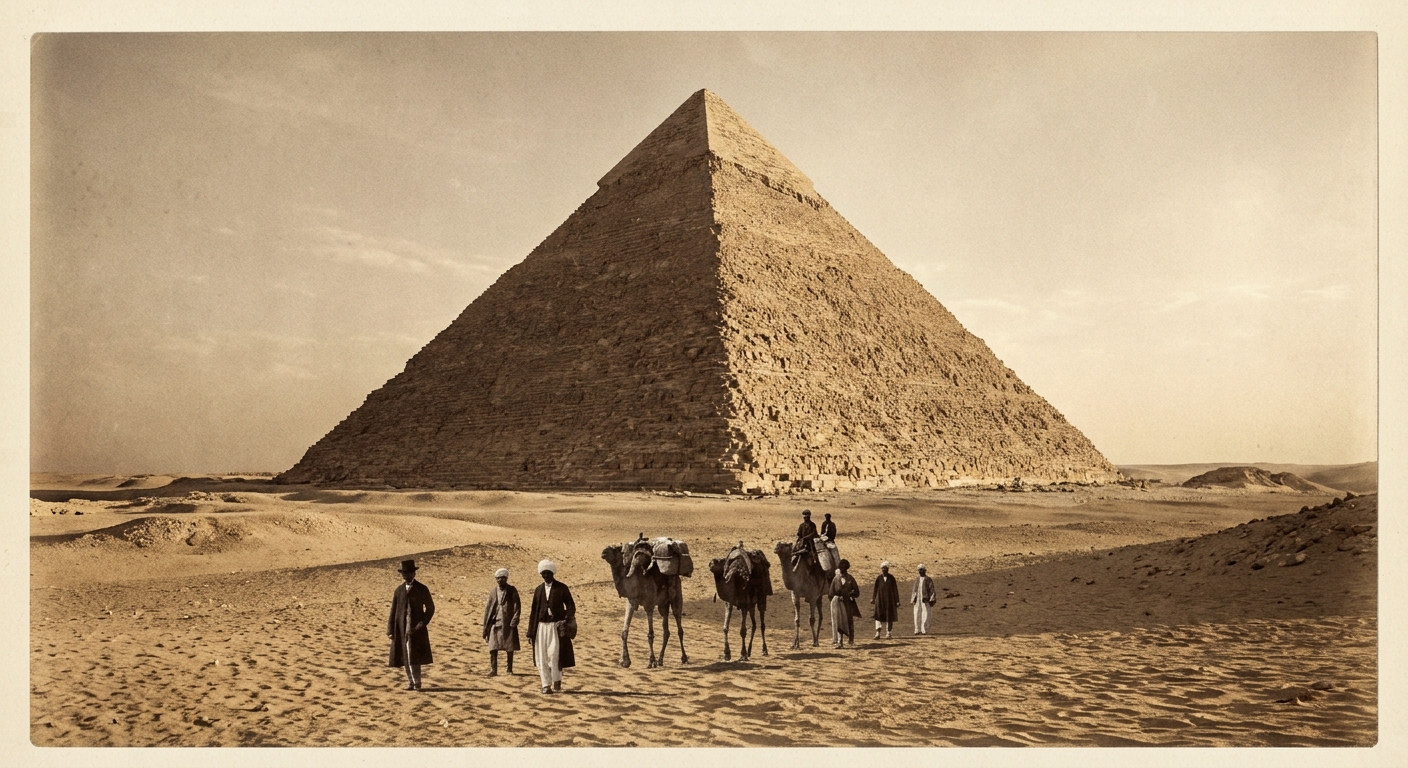
In 1864 the Astronomer Royal for Scotland sailed to Egypt with his wife, a set of precision instruments and a theory. He spent four months camped on the Giza plateau, measuring the Great Pyramid with more care than anyone had managed before, and returned to Edinburgh convinced he had found the fingerprint of God.
The fingerprint was a unit of length. It was about one thousandth larger than the British inch, it had never been used by anyone to measure anything, and Charles Piazzi Smyth spent the rest of his career defending it.
First, the Awkward Part
It would be convenient if Smyth were a crank. He was not.
He was a serious astronomer with genuine achievements. He led the Tenerife expedition of 1856, hauling equipment up a volcano to demonstrate that mountain-top observatories produce sharper images than sea-level ones — a finding that shaped where telescopes have been built ever since. He did pioneering work in infrared astronomy and spectroscopy. He was a skilled photographer at a time when that was itself a technical achievement, and he held the post of Astronomer Royal for Scotland for more than forty years.
He was also, from about 1864 onwards, completely wrong about the pyramids, and he was wrong with the full weight of his professional credibility behind him.
Where the Idea Came From
Smyth did not invent pyramidology. He inherited it from John Taylor, a London publisher who never visited Egypt at all but who noticed, in the 1850s, something intriguing about the numbers other people had brought back.
Divide the perimeter of the Great Pyramid by twice its height, Taylor calculated, and you get something close to pi. This is true, and it has a perfectly sensible explanation: if you measure distances by rolling a drum and counting revolutions, pi turns up in your building without anyone intending it. But Taylor did not reach for that explanation. He reached for a grander one.
The pyramid, he argued, had been built under divine instruction, encoding sacred mathematical truths for later civilisations to rediscover. And the unit those truths were encoded in was not the Egyptian cubit. It was something remarkably close to the British inch.
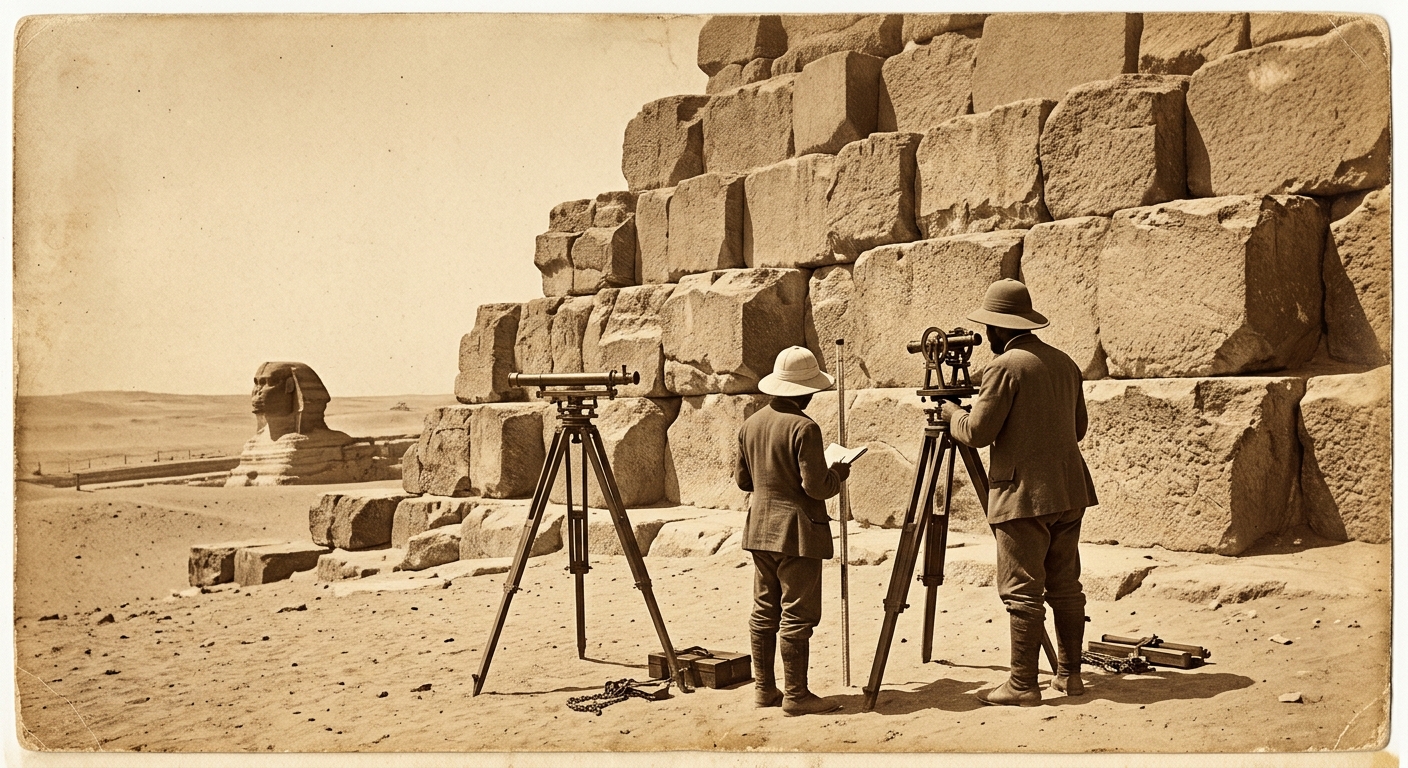
Smyth read Taylor, found it persuasive, and did what Taylor had not: he went and measured.
The Unit That Had to Exist
Here is the mechanism, and it is worth being precise about, because it is the whole problem.
Smyth had a set of conclusions he wanted the pyramid to support. The base perimeter should relate to the length of the solar year. The height should relate to the distance from the Earth to the Sun. The internal passages should encode a chronology of human history.
None of these worked in inches. They worked almost — tantalisingly, maddeningly almost — and the gap was around a tenth of a per cent.
So Smyth proposed a unit that closed the gap. The pyramid inch, he declared, was 1.001 British inches, and twenty-five of them made a sacred cubit of 25.025 inches. With that adjustment the numbers fell into place: the perimeter became 36,524 pyramid inches, which is a hundred times the number of days in the solar year, and everything else followed.
The method, stated plainly: take a conclusion you want to be true, measure something that nearly supports it, then invent a unit of measurement that makes the near-miss into a hit. Name the unit after the thing you measured. The circularity is complete and almost invisible from the inside.
Why the Inch, Though?
This is where it stops being merely eccentric and becomes political.
Britain in the 1860s was arguing about metrication. The French metre was gaining ground internationally, and there was real pressure for Britain to adopt it. Smyth was violently opposed, and the pyramid gave him an argument no rival could match.
If the inch descended, however imperfectly, from a unit God had revealed to the pyramid builders, then abandoning it for a French revolutionary measure was not administrative tidying. It was apostasy. Smyth said so, at length, in several books.
The metre, he pointed out, had been defined by a committee of atheists during a revolution that had abolished God and renamed the months. The inch came from Giza. The choice was obvious.
This argument found an audience. Anti-metrication societies took up pyramidology enthusiastically, and versions of it were still circulating in Britain and America well into the twentieth century, long after Smyth himself was dead.
The Royal Society Declines
Smyth submitted his pyramid work to the Royal Society. The Royal Society was unimpressed, and said so.
He resigned his fellowship in 1874, which is a considerable thing for a working astronomer to do, and continued publishing regardless. His wife Jessie, who had accompanied him to Egypt, kept the notes and sketches and printed the hundreds of photographs his reports depended on, remained a supporter throughout.
The definitive rebuttal came from Flinders Petrie, who went to Giza in 1880 as a young man specifically to verify Smyth's figures. Petrie's father had been a convinced pyramidologist and had raised his son in the faith. What Petrie found instead was that Smyth's measurements were simply wrong: the pyramid was several feet smaller than Smyth had recorded, the passages encoded no chronology, and the pyramid inch had no basis in anything.
His verdict in print was flat. There was no authentic example of a pyramid inch, or of a cubit of 25.025 British inches, that would bear examination.
Petrie went on to become the founder of modern scientific Egyptology, which is a striking thing to have grown out of an attempt to prove the pyramid inch.
What Actually Built the Pyramid
The Egyptians used the royal cubit, about 52.4 centimetres, divided into seven palms of four digits each. We know this because cubit rods survive, in museums, with the divisions marked on them. There is no mystery and no controversy.
The pi relationship in the pyramid's proportions is most likely a by-product of measuring horizontal distances by rolling a drum, as mentioned. The alignment to true north, which is genuinely impressive, is explicable by stellar observation. The construction is an extraordinary achievement of organisation and engineering, and it requires no divine instruction whatever.
Which is, in the end, the more interesting story. A civilisation worked out how to do this, with ropes and copper tools and an enormous amount of labour, and the answer to how is available to anyone prepared to look at the cubit rods.
The Part Worth Keeping
Smyth is a useful figure precisely because he was good at his job.
He was not credulous by temperament. He was rigorous about his instruments, careful about his observations and genuinely innovative in his methods. He wanted, quite badly, for the universe to have a design he could measure — and having wanted it, he found a way to make the measurements agree.
Every unit in the Measurement Archive was invented by someone. The barleycorn, the fathom, the chain, the cran: all of them were proposed by people who needed a way to describe something. The difference is that those units were invented to measure the world, and the pyramid inch was invented to measure a conclusion.
It is the only unit on this site that never measured anything at all. Which is why it is not in the archive, and why it is here instead.
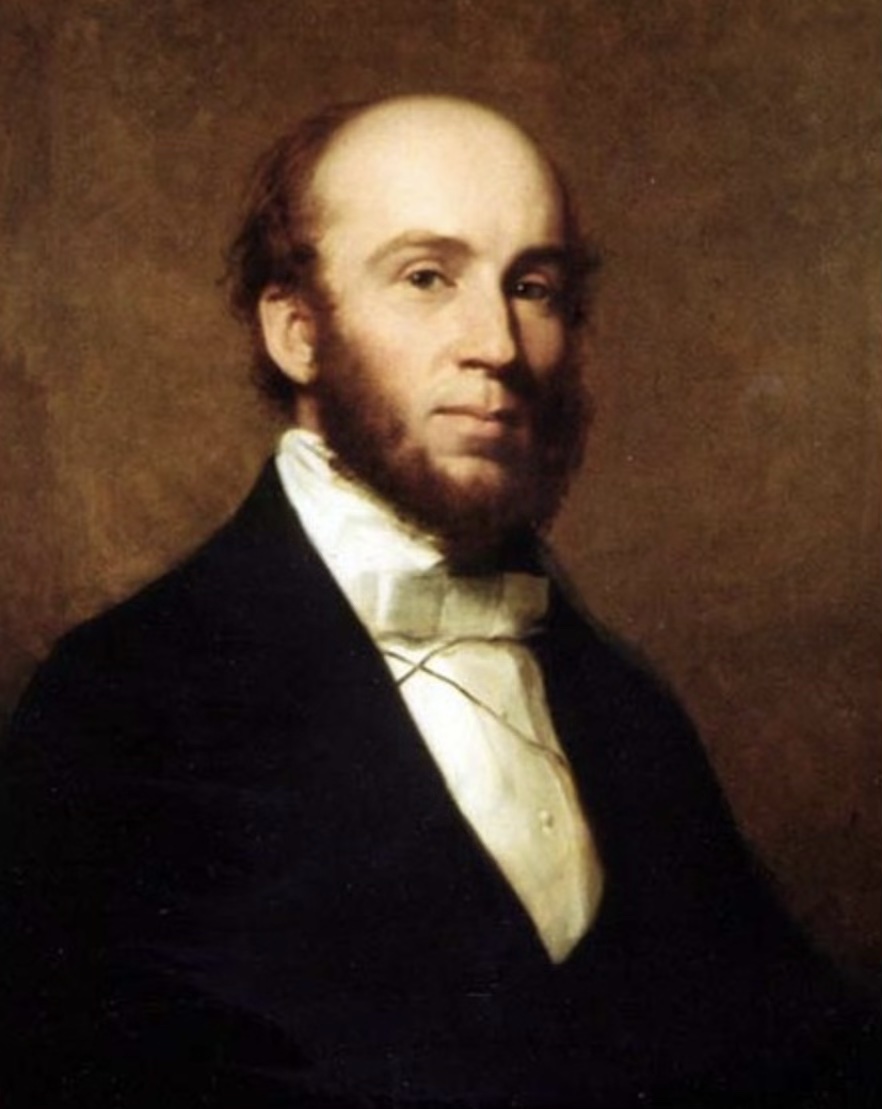
Illustrations in this article are generated impressions, not contemporary photographs. The portrait of Piazzi Smyth is a painting by John Faed.