The Double-Decker Bus: Britain's Least Official Unit of Measurement
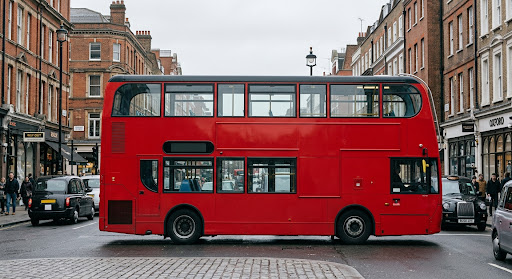
A double-decker bus weighs about twelve tonnes and stands a little under four and a half metres tall, on a body roughly eleven metres long.
You now know more about the bus than most of the people who use it as a unit, which is a category that includes essentially every journalist in Britain.
The Problem It Solves
Here is the difficulty with large numbers: nobody can picture them.
Tell a reader that a blue whale weighs 150 tonnes and they will nod and retain nothing. Tell them it weighs as much as twelve double-decker buses and something happens behind the eyes. They have stood next to a bus. They have been late for one. They know, in their body, roughly how much bus there is.
This is precisely what a unit of measurement is for. The barleycorn worked because everyone had seen barley. The fathom worked because every sailor had arms. The bus works because Britain is a country where the bus is unavoidable.
The only difference is that the barleycorn was fixed by Edward II in 1324 and the bus was fixed by nobody at all.
So How Much Does One Actually Weigh?
This is where it gets awkward, because the answer is: depends which bus.
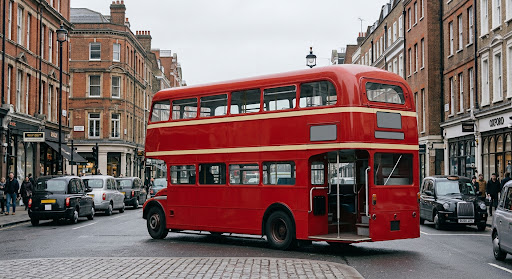
- The Routemaster, the classic red one with the open platform, came in at about 7.5 tonnes unladen. Light, by modern standards, because it had an aluminium body and no wheelchair ramp, no air conditioning and very little in the way of crash protection.
- A modern double-decker runs to 12 tonnes unladen and can approach 18 fully loaded with passengers.
- An electric double-decker is heavier again, because batteries weigh a great deal, and some now exceed 19 tonnes laden.
So a comparison written in 1975 and a comparison written today are using units that differ by more than a factor of two. Nobody adjusts for this. Nobody has ever adjusted for this.
For the sake of argument: this site takes the bus at 12 tonnes, 11 metres long and 4.4 metres tall, which represents a typical modern vehicle. If you are using bus units for anything where the answer matters, you have already made a mistake considerably larger than the margin of error.
The Wider Family of Unofficial Units
The bus does not work alone. British journalism maintains an entire parallel measurement system, none of it standardised, all of it instantly understood:
- The football pitch, for area. Useless, in fact, because the laws of the game permit pitches anywhere from 90 to 120 metres long, so the unit varies by a third depending on which ground you are imagining.
- Wales, for larger areas. Roughly 20,800 square kilometres. Deployed mainly for deforestation and ice-sheet loss, and a source of quiet irritation to actual Welsh people.
- The Olympic swimming pool, for volume. This one is genuinely standardised at 2,500 cubic metres, making it the only rigorous unit in the entire family.
- Nelson's Column, for height. About 52 metres including the man himself.
- The Isle of Wight, for medium areas, roughly 380 square kilometres. Chosen presumably because it is an island and therefore looks like a discrete quantity on a map.
- The blue whale, for mass, which is circular given that the whale is usually being described in buses.
Why the Bus and Not Something Sensible?
Three reasons, and they are the same three reasons that produced every customary unit in the archive.
It is everywhere. A unit is only useful if the reference object is familiar, which is why the Romans measured in paces and the Saxons in barleycorns rather than in anything more exact but less available.
It is roughly the right size. Big enough to be worth comparing large things to, small enough that the multiplier stays comprehensible. Twelve buses is a picture. Twelve thousand kilograms is not.
It is culturally specific. The double-decker is British in a way the articulated lorry is not. It does the same job as the London taxi in a different sort of sentence: it tells you where you are as well as how big something is.
The Honest Objection
All of which is charming, and all of which is also slightly annoying, because these comparisons frequently obscure more than they reveal.
"Twelve double-decker buses" sounds enormous. Twelve buses parked side by side would cover about one and a third tennis courts. The comparison conveys drama, not scale, and it is used precisely when drama is what the writer is after.
Whereas a metre is a metre, and it does not care how you feel about it.
And Yet
The bus persists, because it is doing something the metre cannot.
Every measurement system in this archive began as a comparison to something everyone knew. A foot was a foot. A hand was a hand. A stone was an actual stone, kept in the market square so that any dispute could be settled by picking it up. The system we use now is descended entirely from people gesturing at familiar objects and agreeing that would do.
The double-decker bus is that same instinct, still operating, in a country that formally metricated half a century ago and never quite believed it.
Nobody legislated it. Nobody standardised it. Nobody will. And the next time a whale is weighed, it will be weighed in buses.