Why a Mile Is 5,280 Feet: Britain Measured by the Plough
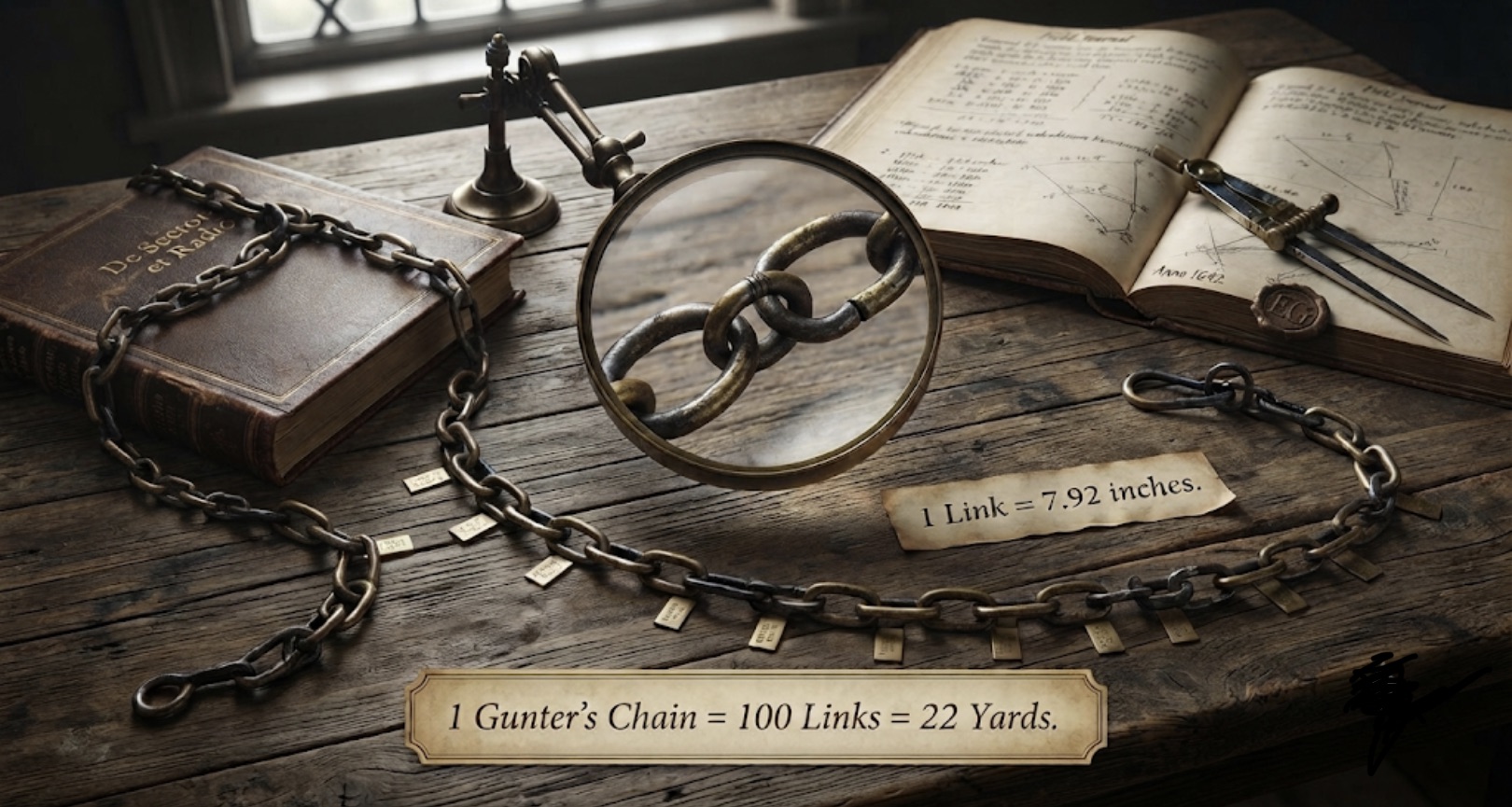
A mile is 5,280 feet.
That is a deeply strange number. It is not round in any system. It is not a power of anything. If you were designing a unit of distance from scratch you would never arrive at it, and nobody ever did — it is the answer to a different question entirely, and the question was about ploughing.
The Ladder
| Unit | Equals | Yards | Feet |
|---|---|---|---|
| Rod, pole or perch | 25 links | 5.5 | 16.5 |
| Chain | 4 rods | 22 | 66 |
| Furlong | 10 chains | 220 | 660 |
| Mile | 8 furlongs | 1,760 | 5,280 |
Three of those four units come from agriculture. One came from the Roman army. The interesting part is which one had to give way.
The Rod: A Stick for Driving Oxen
Start at the bottom, with the least glamorous object in British measurement: a wooden pole about five and a half yards long, used to drive a team of oxen.
Rod, pole and perch are three words for the same length — 5.5 yards, 16.5 feet. They are not near-synonyms or regional variants of each other; by the nineteenth century they were legally interchangeable, and a surveyor would use whichever word came to hand. Perch comes from the Latin pertica, a surveyor's staff. Rod and pole are simply what the thing was.
The length was not chosen. It was the practical length of a goad that could reach the lead animals of a plough team from behind, which is to say it was determined by the length of an ox.
Regional variation persisted long after the statute perch was fixed. The Irish perch ran to 7 yards rather than 5.5, and some agricultural districts kept customary rods that varied with the soil and the crop — a reminder that these were units of labour before they were units of length. How much ground you could work mattered more than how much ground there was.
The Chain: One Man Solves the Arithmetic
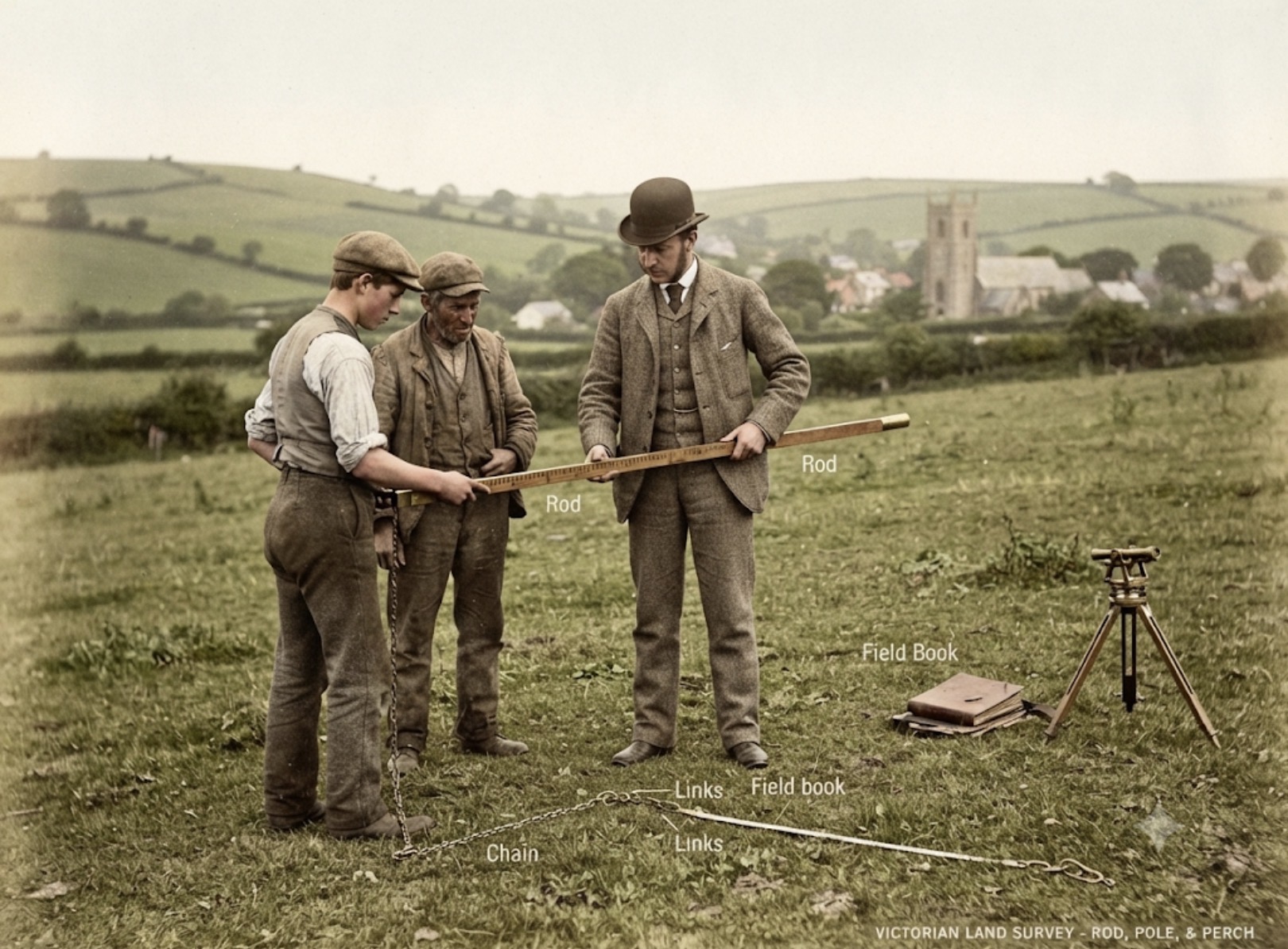
In 1620 the mathematician Edmund Gunter did something quietly brilliant. He made a chain.
Not a metaphor — an actual chain, of 100 iron links, 22 yards end to end. Four rods exactly. And it turned land measurement from a calculation into a physical act: walk the chain across a field, count, and you have your answer.
What makes it clever is where the numbers land:
- 10 chains make a furlong
- 80 chains make a mile
- 10 square chains make an acre
That last one is the point of the whole exercise. Before Gunter, working out the area of an irregular field was a job for someone with mathematical training. After Gunter, it was arithmetic a surveyor could do in a notebook in a wet field, because the chain had been sized so that the answers came out whole.
The chain went everywhere the British went. It measured the American prairies, the Australian outback and every cutting and embankment of the railway mania of the 1840s. A tool invented to settle arguments about English field boundaries ended up drawing the property lines of several continents.
The Furlong: How Far an Ox Will Go
Ten chains. 220 yards. And a word that is simply a compression of two older ones: furh, a furrow, and lang, long. A furlong is a furrow-long.
It is the distance a team of eight oxen could pull a heavy plough before they had to stop, breathe and be turned around. Not a decision anybody made — an observation about animals, repeated across enough fields and enough centuries to harden into a number.
And then it became the unit everything else was built on, because of the acre.
An acre is one furlong long and one chain wide. 220 yards by 22 yards, which is 4,840 square yards, which is also exactly ten square chains. It is the area a plough team could work in a day — a long thin strip, not a square, because the shape follows the animals rather than the geometry.
Once English land ownership was recorded in acres, the furlong could not be changed. Altering it would have meant redrawing every field boundary and every deed in the country. The unit was locked in place by the paperwork resting on top of it.
The Mile: Rome Arrives
Everything above grew out of English soil. The mile did not.
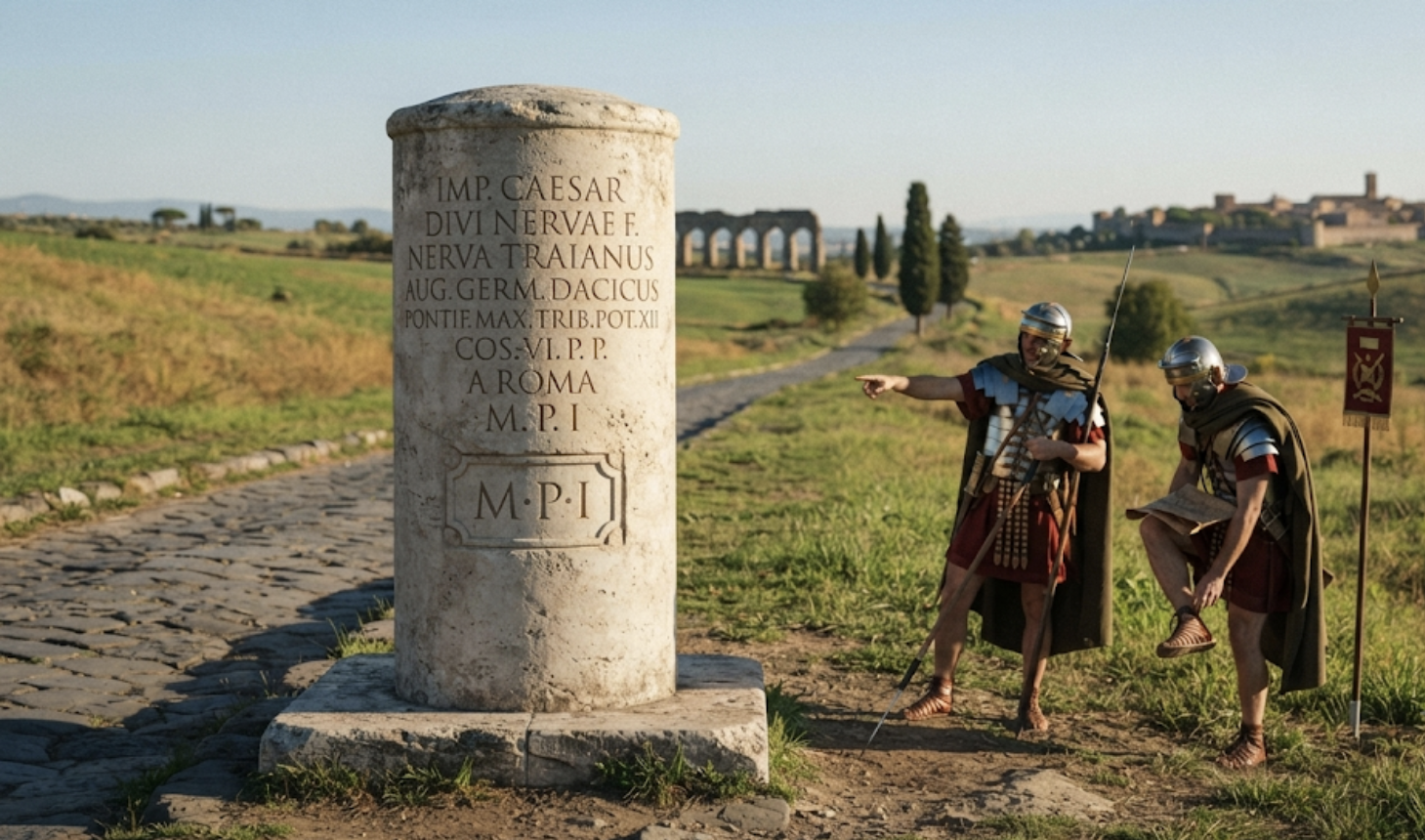
It comes from the Latin mille passus — a thousand paces. A Roman pace was not a step but a double step, heel-strike to the next strike of the same heel, and Roman surveyors measured roads with odometers geared to a chariot wheel, dropping a pebble into a box every thousand paces to mark where the next milestone should be cut.
When the legions left, the mile stayed, and promptly came apart. Ireland, Scotland and the English farming districts all kept their own versions. By the Tudor period the English mile had drifted to something like 5,000 feet, which agreed with nothing in particular and certainly not with the furlong.
So a merchant working in miles and a farmer working in furlongs could not read the same map. That is an irritation in a market town and a serious problem in a country starting to think about national infrastructure.
1593: Rome Loses
Elizabeth I settled it by statute in 1593, and the way she settled it is the whole story of this article.
She could have fixed the mile at its Roman length and made the furlong fit around it. That would have been the tidy, classical answer, and it would have produced a mile of roughly 5,000 feet and a furlong of some awkward fraction.
She did the opposite. The statute defined the mile as eight furlongs — leaving the ploughing untouched and bending the Roman unit to fit it. Eight times 660 feet is 5,280.
That is why the number is ugly. It is the length of a Roman marching unit after it has been forced to accommodate the stamina of an English ox. The empire that built the roads lost the argument to the animals that ploughed the fields beside them, and every road sign in Britain and America still carries the result.
The 1824 Imperial reform cemented Elizabeth's figure, and by then it was embedded in the layout of the world's first railway network, which made it effectively permanent.
Where They Survive
All four units are still in use, in places that reveal exactly what each was for.
The chain is on the railways. It remains the engineering baseline for British track, and trackside mileposts still carry chain markings. The tool that surveyed the railways is still the tool the railways are measured in.
The chain is also on every cricket pitch in the world. When the laws of the game were written down, somebody needed a standard distance between the wickets and reached for the surveying equipment to hand. Twenty-two yards, from Lord's to the MCG, is one Gunter's chain lying on the grass.
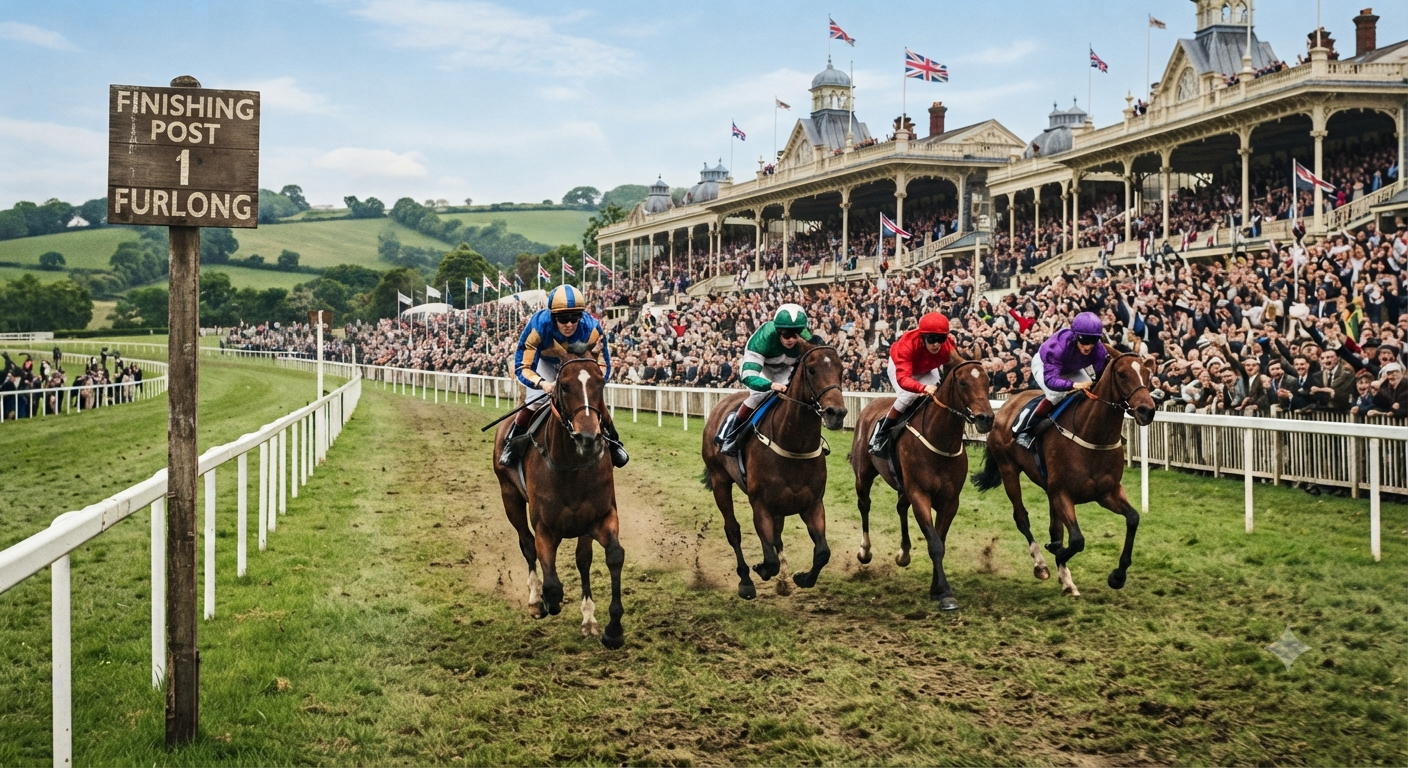
The furlong is at the racecourse. Early race meetings were laid out on existing agricultural land, using the field boundaries that were already there — and those boundaries were furlongs. Ascot and Cheltenham still post distances in a unit defined by how far oxen walk before resting.
The rod survives in paperwork. It turns up in old deeds and allotment sizes and almost nowhere else, which is appropriate for a unit that was always about who owned what rather than how far anything was.
What the Number Means
We tend to read imperial units as clutter — a pile of inherited oddities that a sensible country would have cleared away. The ladder from rod to mile is the opposite of clutter. It is a coherent system, internally consistent, in which every unit is a whole multiple of the one below it, built so that a man in a field could calculate an acreage without writing anything down.
What makes it look irrational is the one unit that came from outside. The mile is the foreign component, and 5,280 is the precise measure of how far Rome had to bend to fit in.